
Mount Kilimanjaro Trek (Machame Route)
- Duration
- 9 days
- Location
- Tanzania
- Grade
- Difficult
- Max altitude
- 5,895m
- Group size
- 2–10 people
- Trail type
- Volcanic trekking (non-technical)
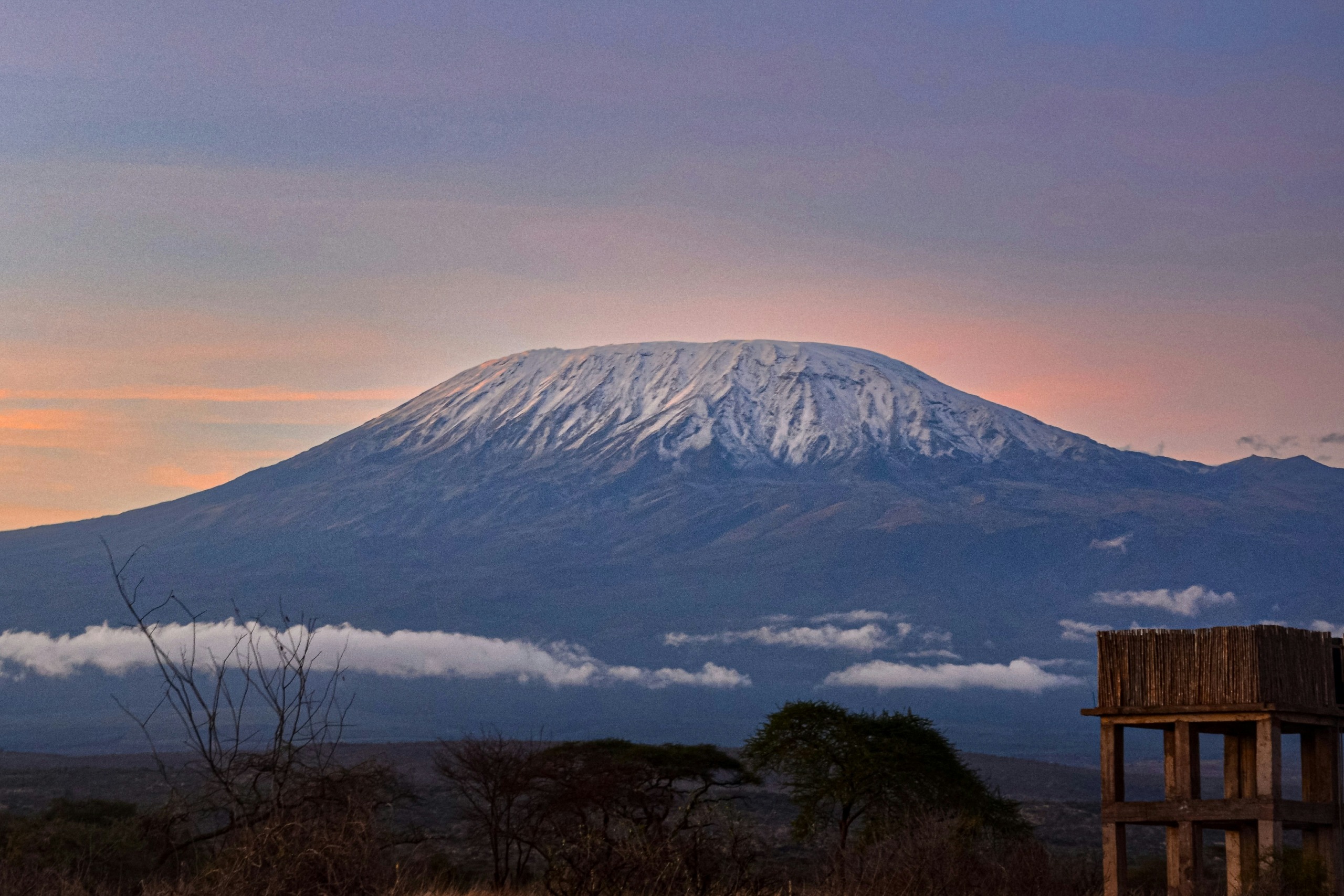
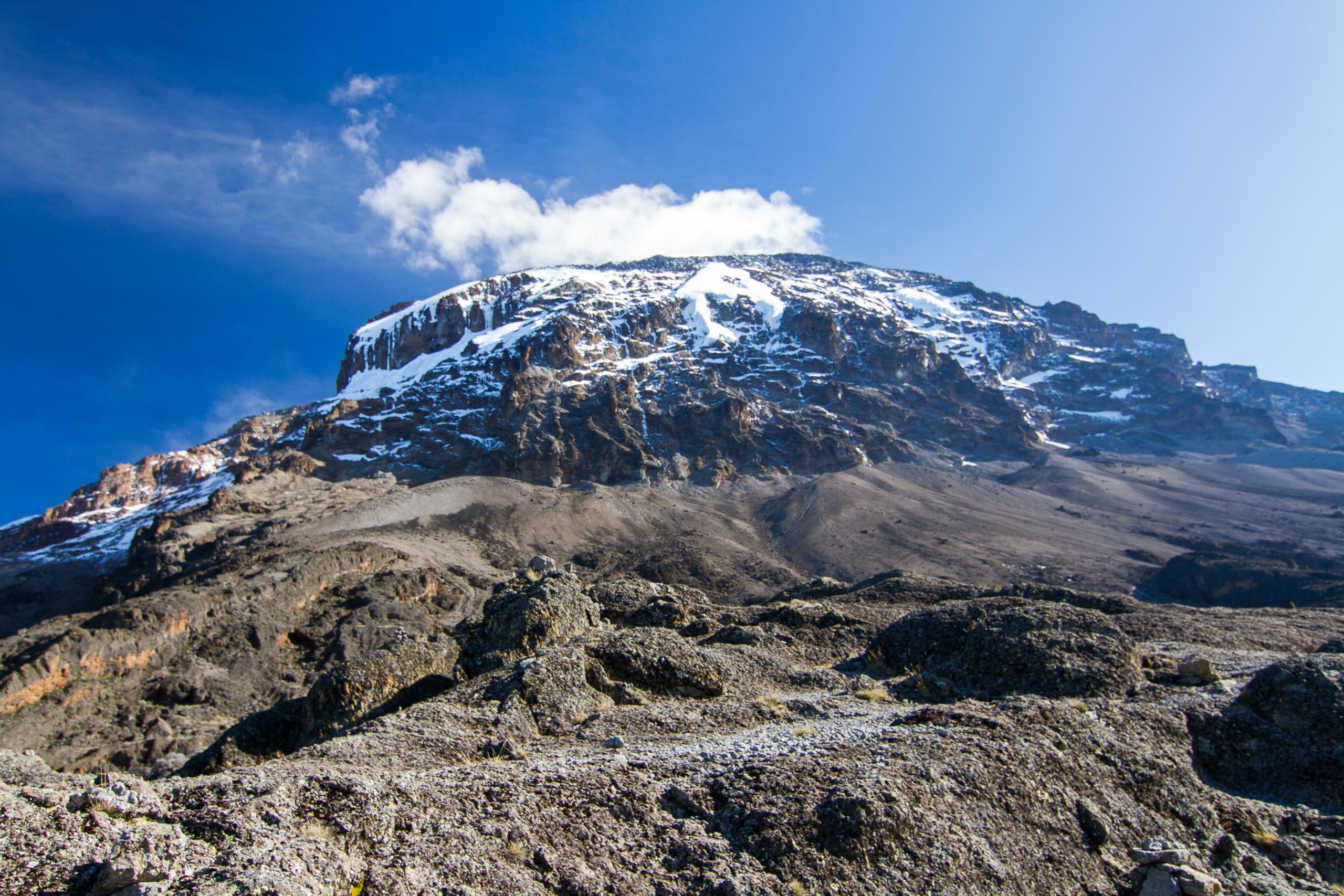
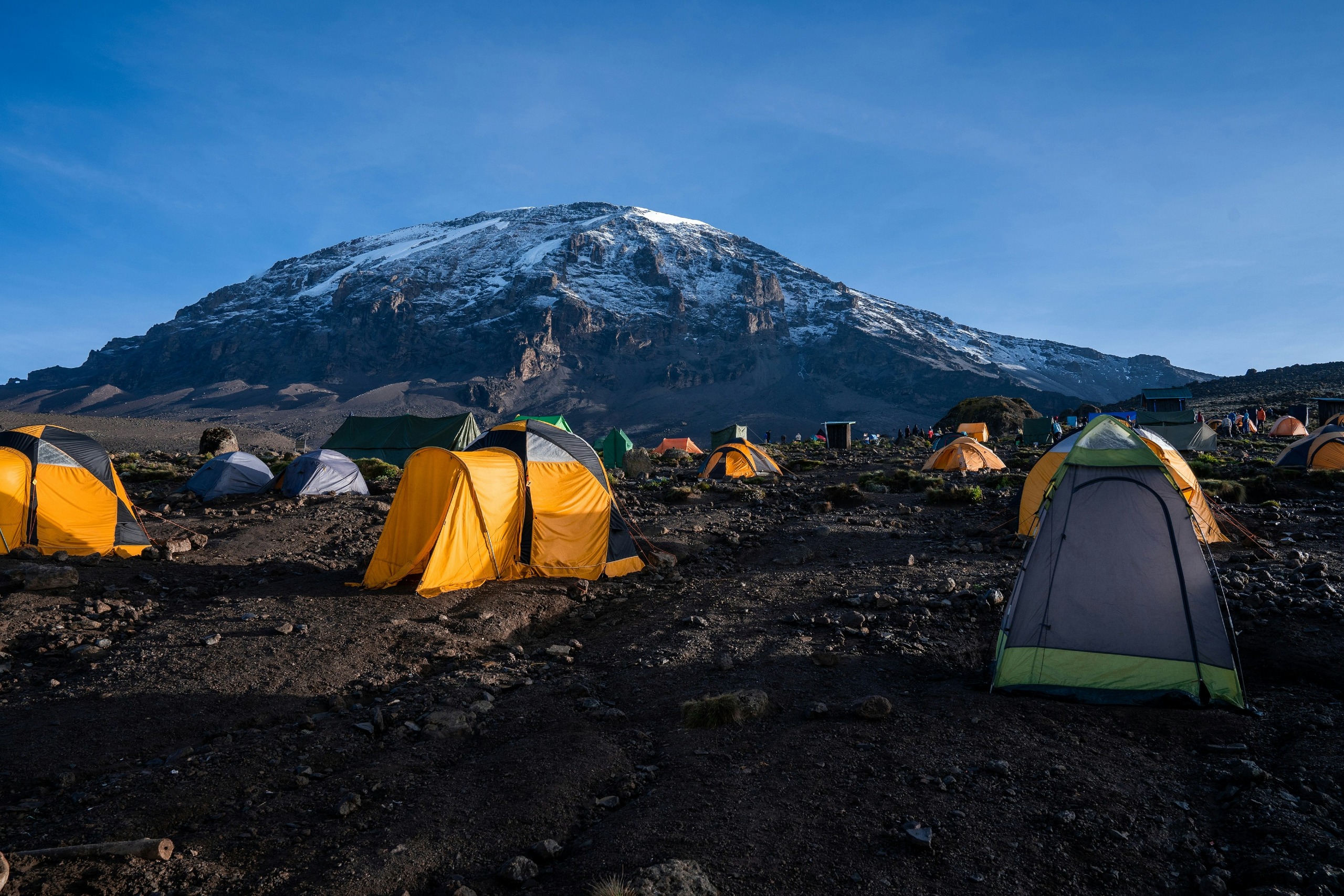
The Machame Route—widely known as the "Whiskey Route"—is the most popular path to the summit of Mount Kilimanjaro (Uhuru Peak, 5,895 m / 19,341 ft). It approaches the summit from the south, combining scenic diversity with an optimal "climb high, sleep low" acclimatization profile.
Overview of Mount KilimanjaroClick to open side panel for more information
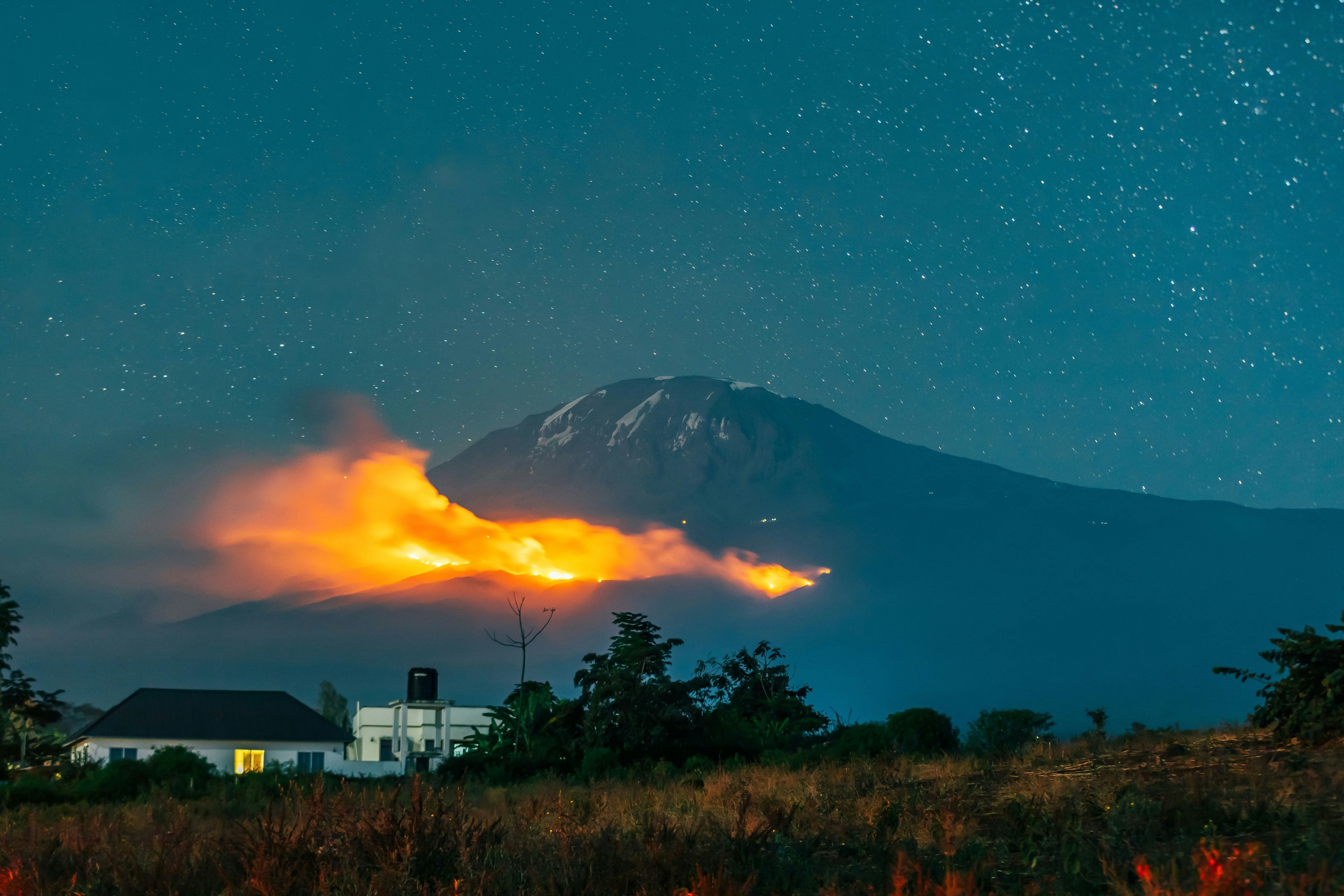
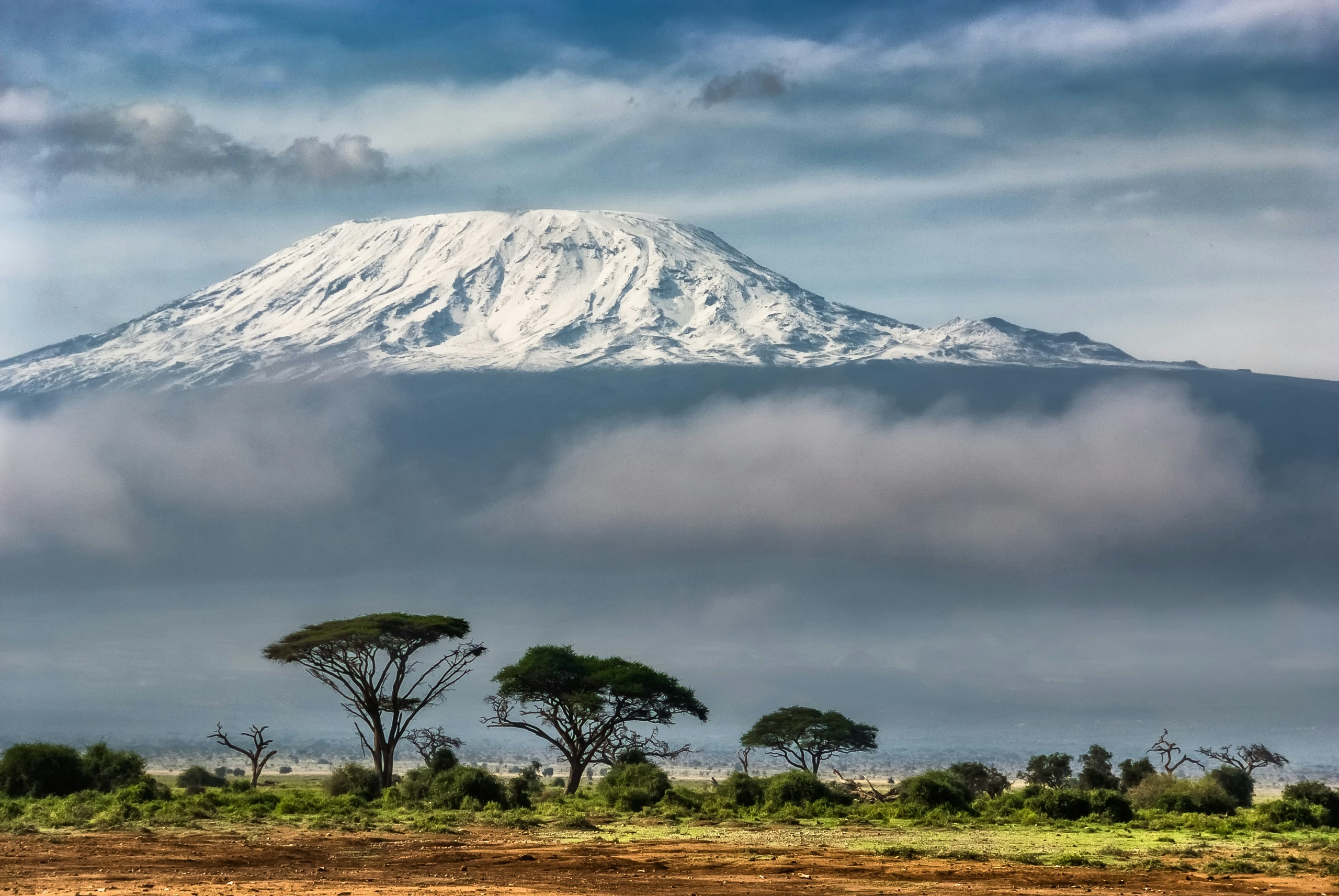
Rising dramatically out of the East African rift plains of northeastern Tanzania, Mount Kilimanjaro is the highest peak in Africa and the tallest free-standing mountain in the world, standing at 5,895 meters (19,341 feet) above sea level. Because it is not part of an interconnected mountain range, Kilimanjaro stands alone as an immense volcanic massif covering roughly 100 kilometers long by 65 kilometers wide.
Geological Profile & Volcanic Cones
Kilimanjaro is a dormant stratovolcano formed through millions of years of volcanic activity linked with the Great Rift Valley. It consists of three primary volcanic cones:
Kibo (5,895 m): The central and highest peak, crowned by Uhuru Peak. It is dormant (the youngest cone) and retains sulfurous gas vents (fumaroles) deep inside its inner Reusch Crater. Its summit crater rim holds the remaining equatorial glaciers and ice fields.
Mawenzi (5,149 m): Located to the east, Mawenzi is an extinct, deeply eroded, jagged volcanic plug. Unlike Kibo, Mawenzi requires technical rock and ice climbing skills.
Shira (3,962 m): To the west lies the oldest, extinct cone. Shira collapsed into a vast, flat volcanic plateau (the Shira Plateau) that trekkers traverse on western and southern routes.
The Five Ecological Life Zones
One of the most remarkable aspects of climbing Kilimanjaro is traversing five distinct ecological zones—often described as walking from the equator to the Arctic in a matter of days:
Cultivation Zone (800 m – 1,800 m): Lush farmland fed by mountain runoff, cultivated with coffee and banana plantations by the local Chagga people.
Montane Rainforest (1,800 m – 2,800 m): Dense, humid canopy characterized by high rainfall, moss-draped camphor trees, giant ferns, and wildlife like colobus monkeys and blue monkeys.
Moorland & Heath (2,800 m – 4,000 m): Open landscapes filled with heather shrubs, wild grasses, and the endemic giant lobelias and bizarre Dendrosenecio (giant groundsels) adapted to harsh daily freeze-thaw cycles.
Alpine Desert (4,000 m – 5,000 m): A desolate, windswept moonscape characterized by low humidity, intense solar radiation, volcanic scree, and extreme temperature fluctuations (scorching days and sub-zero nights).
Arctic Zone / Summit (5,000 m – 5,895 m): Dominated by scree slopes, ice sheets, and glaciers where oxygen levels drop to roughly half of sea-level density.
Trip facts
- Walking hours/day
- 3–14 hrs (summit day longest)
- Activities
- Trekking (summit climb)
- Meals
- Veg + Egg (Lunch Day 2 – Lunch Day 8)
- Food type
- Vegetarian + Egg
- Accommodation
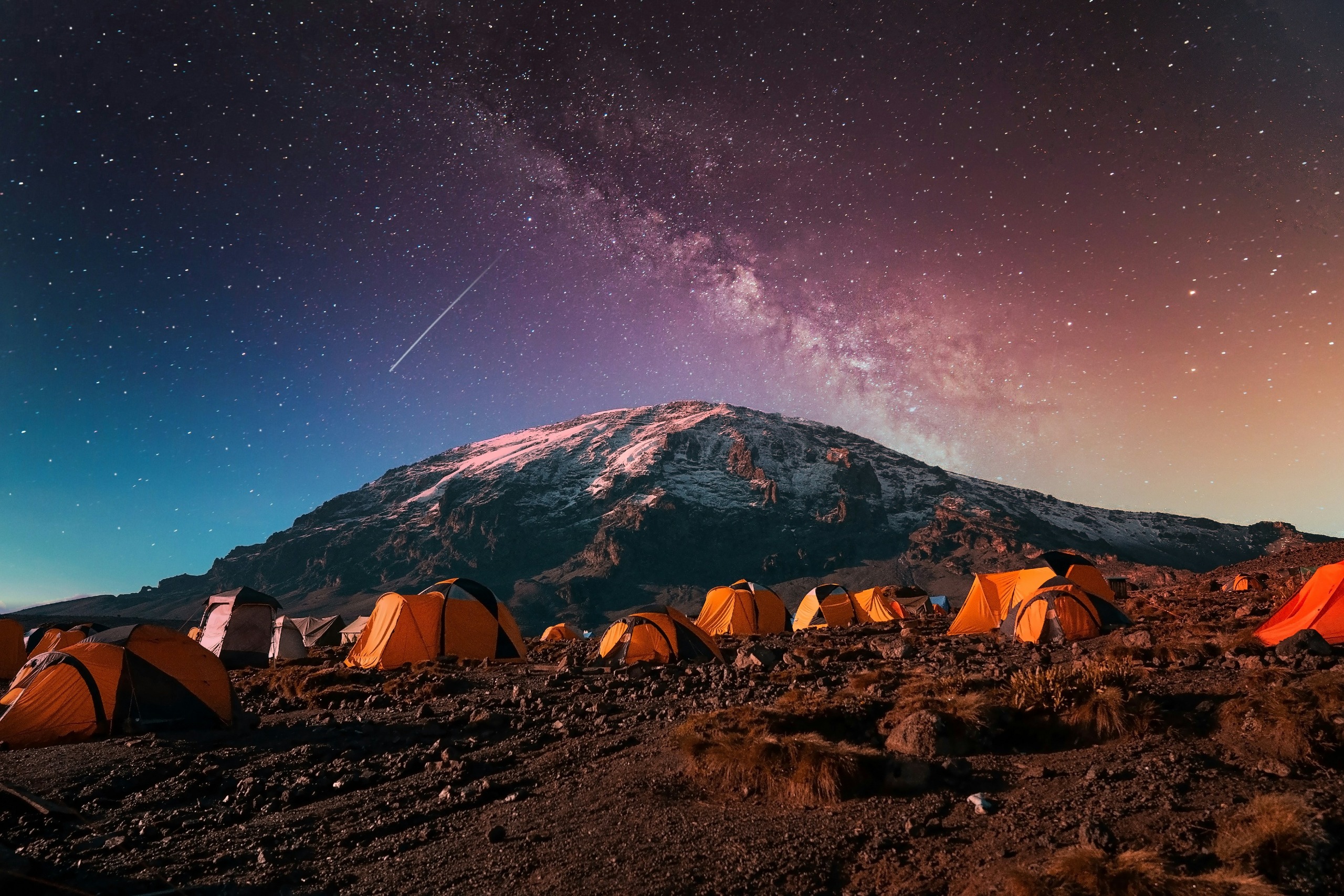
- Hotel + camping (twin sharing) on route
- Starting point
- Moshi (via Kilimanjaro Intl. Airport)
- Nearest airport
- Kilimanjaro International Airport
- Fitness level required
- Physically demanding due to altitude; no mountaineering skills required
- Uhuru Peak (5,895 m), the highest point in Africa and one of the Seven Summits
- Crosses five distinct climate zones from rainforest to summit glaciers
- Barranco Wall — one of the route's most scenic and exciting sections
Day 1
Arrival at Kilimanjaro Intl. Airport to Moshi
Climb briefing, gear check
Day 2
Moshi to Machame Gate to Machame Camp
Rainforest trekking
Day 3
Machame Camp to Shira Camp
Moorland, first views of Kibo Peak
Day 4
Shira Camp to Lava Tower to Barranco Camp
Climb-high-sleep-low via Lava Tower (4,600 m)
Day 5
Barranco Camp to Karanga Camp
Barranco Wall climb
Day 6
Karanga Camp to Barafu Camp
Barren alpine terrain; rest before summit push
Day 7
Barafu Camp to Uhuru Peak to Millennium Camp
Summit day — sunrise at Uhuru Peak via Stella Point
Day 8
Millennium Camp to Mweka Gate to Moshi
Descent, summit certificates
Day 9
Departure from Moshi
Transfer to Kilimanjaro Intl. Airport
Standard Inclusions
Park & Regulatory Fees: Kilimanjaro National Park (KINAPA) entry, daily camping, rescue fees, and local government VAT.
Mountain Crew: Wilderness First Responder (WFR) certified lead guide, assistant guides, camp chef, and porters (crew ratio typically 3–4 per climber).
Meals & Hydration: Three hot meals per day on the trail, afternoon snacks, and treated/boiled drinking water throughout the climb.
Camping Equipment: Weatherproof 3- or 4-season sleeping tents, dining tent with table and chairs, mess gear, and basic mess tent lighting.
Safety Equipment: Pulse oximeters for twice-daily biometric checks, emergency bottled oxygen, and comprehensive mountain first-aid kits.
Transfers: Ground transportation from Moshi/Arusha to Machame Gate and return from Mweka Gate.
Airfare & Visas: International and domestic flights to Kilimanjaro (JRO) and Tanzania tourist entry visas.
Personal Trekking Gear: Sleeping bag (rated to -10°C/14°F or lower), sleeping mat, trekking poles, thermal clothing, and hiking boots (typically rentable locally).
Crew Gratuities: Customary tips for guides, cooks, and porters (approx. $250–$350 USD total per climber distributed among the crew).
Travel & Medical Insurance: Mandatory high-altitude trekking insurance covering evacuation up to 6,000 meters.
Town Accommodation: Hotel stays before and after the trek (unless explicitly packaged).
Personal Items: Private portable chemical flush toilet (optional add-on), snacks, soft drinks/alcohol, and laundry.
- Age
- 12+ years
- Fitness benchmark
- Good cardiovascular fitness; able to walk 5–7 hours daily for multiple consecutive days; no technical climbing skill required (non-technical route)
- Medical & health restrictions
- Consult a doctor before booking if there is a history of heart or lung conditions; genuine altitude-sickness risk above 3,000 m regardless of fitness level
AMS Management
- Daily health checks (Lake Louise AMS score) and pulse-oximeter readings by guides; the Machame route's own "climb high, sleep low" profile (e.g. via Lava Tower) is built into the itinerary for acclimatisation
Emergency Evacuation
- Guides carry oxygen, a stretcher and a first-aid kit; Kilimanjaro National Park (KINAPA) rescue teams are on call on the mountain
Summit Night Conditions
- Temperatures at Uhuru Peak can drop below –20°C with wind chill; weather changes quickly above Barafu Camp
Guide Ratio
- A high guide-to-climber ratio is maintained throughout, at its highest on summit night
Training Pre-Trip
- Regular cardio (hiking, running, stair-climbing) for 2–3 months before departure is recommended; no technical mountaineering training is required for this route
Personal to Bring
- Duffel bag for porters (max 15 kg) — soft-sided, not a suitcase or trolley
- Moisture-wicking thermal base layers (upper & lower)
- Insulated down jacket
- Waterproof and windproof shell jacket and pants
- Insulated summit gloves plus inner liner gloves
- Warm hat/beanie and a buff or balaclava
- Broken-in hiking boots with ankle support
- Camp shoes/sandals
- Trekking poles
- Headlamp with spare batteries (for the pre-dawn summit push)
- UV-protection sunglasses (category 4)
- Water bottles or hydration bladder (2–3 L capacity)
- Personal first-aid kit and prescribed medication (e.g. Diamox, if prescribed by a doctor)
- Power bank (no charging points on the mountain)
- Sunscreen and lip balm with SPF
Plans change, and mountains change them for you. Here is exactly what happens to your money when they do.
1. How much you get back
Cancellation charges are worked out from the day we receive your written notice to Day 1 of the itinerary — your first scheduled day of travel, not the date you fly out from the UAE.
60 days or more before Day 1 — 100% of the land package refunded
45–59 days — 75% refunded
30–44 days — 50% refunded
15–29 days — 25% refunded
14 days or fewer — no refund
Percentages apply to the land package — everything we arrange for you at the destination. Your deposit and the third-party costs listed in section 2 sit outside this and are deducted first. Not turning up is treated the same as cancelling on the day.
Peak-season departures and private or charter trips are sometimes held under tighter supplier terms. Where a different schedule applies to your trip, we show it to you on the booking page before you pay a deposit.
2. What we can't refund
Some of your money leaves the UAE the moment your place is confirmed, and it does not come back to us. Once these are issued, purchased or committed, they are deducted in full from any refund, however early you cancel:
Domestic flights, ferries or other internal transport booked within the destination
Permits, park entry fees and any registration issued in your name, where these are non-transferable under local rules
Visa fees for the destination country
Travel insurance premiums, once your policy is issued
Accommodation pre-payments that the property itself treats as non-refundable, particularly in peak season
International airfare, where we booked it for you — this follows the airline's own fare rules
Equipment or gear bought or hired specifically for you
If a supplier does return money to us after you cancel, we pass every dirham of it on to you, less the bank charges we incur receiving it.
3. Deposit and balance
A deposit of 25% of the trip price, minimum AED 1,500 per person, holds your place. It is non-refundable, but it can move with you to another departure — see section 4.
The balance is due 45 days before Day 1. Book inside 45 days and the full amount is payable at the time of booking. If the balance is not paid by the due date, we treat the booking as cancelled by you and the deposit is forfeited.
We take payment in dirhams by card or bank transfer to the company account named on your invoice. Never hand cash to a guide or local agent, and never pay a third party on our behalf. Payments made that way sit outside this contract and we cannot refund them.
4. Moving your booking
We would rather move you than lose you.
60 days or more before departure — one move to another Jebel Expeditions departure within 12 months, free. Your deposit travels with you; any price difference is payable.
30 to 59 days — a move costs AED 500 per person, plus anything already committed under section 2.
Under 30 days — this counts as a cancellation and section 1 applies.
You can also pass your place to someone else up to 21 days before departure, as long as they meet the fitness and experience requirements for that trip and any local paperwork can be issued in time. That costs AED 500 per person plus the real cost of reissuing flights, permits or visas.
One free move per booking.
5. If we cancel
Not enough people
Fixed departures need a minimum group size, shown on each trip page. We confirm or cancel no later than 45 days before Day 1. If we cancel, you choose: everything you have paid us back in full, including the deposit, or a move to another departure.
Anything else within our control
You get a full refund of everything paid to us. We will also cover documented costs you took on because of the booking — independently booked flights, visa fees — up to AED 2,000 per person, against receipts.
Events beyond anyone's control
Extreme weather, natural disaster, airspace or border closure, strikes, civil unrest, epidemic, or permits withdrawn by a local authority. We charge you no cancellation fee of our own in these situations. We refund everything we recover from suppliers, and issue a credit note for the rest, valid 18 months and transferable to a close family member.
6. Changes during the trip
Itineraries move with local conditions. Your trip leader may change routing, accommodation or the day-to-day plan where safety or circumstances require it.
Where a flight, transfer or crossing central to the itinerary is disrupted, we hold the group at the standard of accommodation booked, or arrange an alternative where one is available. Alternatives outside the original plan are not included in the trip price; the cost is shared between those who use them and is payable before travel, or claimed from your insurer where your policy covers delay.
Extra nights, meals and transport caused by disruption outside our control are yours to pay, and are usually covered by travel insurance. Where a change is within our control and materially reduces what you get, we refund the difference.
7. Leaving early
If you leave a trip before it ends — for any reason — there is no refund for unused nights, meals, transport, guiding or permits. Those are already paid for.
Evacuation, hospital treatment and repatriation are your responsibility and are claimed from your insurer. We coordinate the evacuation and give your insurer every document they ask for. If we advance money for you in an emergency, it is repayable within 14 days of your return.
We may also end your trip if you are not fit to continue safely, if you misrepresented your health or experience, or if your conduct puts the group or our staff at risk. No refund is due in those cases.
8. Insurance is not optional
You cannot travel with us without travel insurance. Your policy must cover, at a minimum:
the activities and terrain on your specific itinerary — check this matches before you buy
emergency evacuation and repatriation
medical treatment abroad
trip cancellation and curtailment
Send us your policy number, insurer and 24-hour emergency line at least 30 days before departure. Without it we cannot let you travel, and that counts as a cancellation under section 1.
Most of what this policy cannot return to you, a good insurance policy can. Read the cancellation clauses before you book, not after.
9. How refunds are paid
In dirhams, to the original payment method and the original payer only. We cannot pay a refund into someone else's account.
Processed within 21 business days of us confirming the amount in writing. Card refunds can take another 7 to 14 working days to show on your statement.
Bank charges, card fees and currency conversion losses come out of the refunded amount.
Where the refund depends on money coming back from an airline or local supplier, the clock starts when we receive it. We will update you in writing every 14 days until it is settled.
Cancelling for a medical emergency, a bereavement in your immediate family, or a visa refusal outside your control? Tell us before Day 1 and send documentation within 14 days. We will chase supplier waivers on your behalf and turn what we retain into an 18-month credit note rather than keeping it.
10. If something goes wrong
Write to us first. We acknowledge cancellation notices within one business day, confirm the refund calculation within five, and answer complaints substantively within ten.
If we have not resolved it, you can take the matter to the Department of Economy and Tourism in Dubai at consumerrights.ae, through the Dubai Consumer app, or on 600 545 555, under Federal Law No. 15 of 2020 on Consumer Protection.
This policy forms part of our booking terms and conditions, is governed by the laws of the UAE as applied in Dubai, and the Dubai courts have exclusive jurisdiction. Nothing here removes a right you hold under UAE consumer protection law.